Table of Contents
- Start With Your Undertone: The Vein Test and Beyond
- Warm vs Cool Undertones Jewelry: Which Turquoise Shade Works Best
- The Best Metal for Turquoise Jewelry: Sterling Silver, Gold, or Rose Gold
- Reading the Stone: How Turquoise Matrix and Saturation Change the Match
- Contrast Ratios: Why Lighter Stones Pop on Darker Skin and Vice Versa
- Caring for Sterling Silver and Turquoise: Keeping Your Match Looking Its Best
- Styling Turquoise Jewelry for Western Looks: Placement, Layering, and Occasion
- Frequently Asked Questions
Last Updated: October 2, 2026
Start With Your Undertone: The Vein Test and Beyond
Your skin's undertone, not its surface color, decides which turquoise jewelry looks best on you. Undertones fall into three groups: cool, warm, and neutral. This guide shows you how to find yours in under a minute, then use it to pick stones and metals that flatter your skin instead of fighting it.
Here is the part most guides skip: you are not matching turquoise to your skin. You are matching it to your undertone. Get that wrong and even a beautiful stone can look dull against you.
The Vein Test: A 30-Second Diagnostic
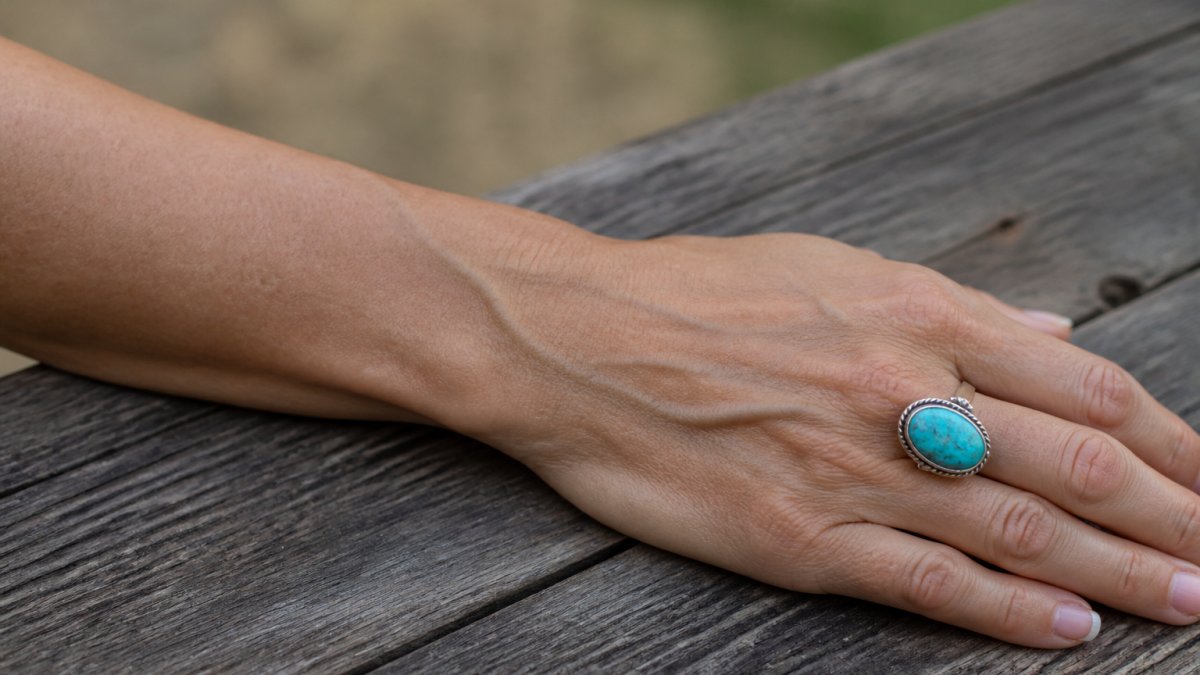
Look at the veins on the inside of your wrist in natural daylight. Blue or purple veins point to cool undertones. Green veins point to warm undertones.
The vein test method for finding skin undertones works best in daylight, not under bathroom bulbs. Artificial light shifts colors and throws off the read.
The Jewelry Test: What You Already Own Tells You Plenty
Pull out your jewelry box. The metal you reach for most often is a clue. People with warm undertones tend to gravitate toward yellow and rose gold.
Now check how your skin reacts to each. If silver makes your skin look bright, you lean cool. If gold warms up your face, you lean warm. Your instincts have been answering this question for years.
The Contrast Check: A Second Diagnostic Most Guides Miss
Undertone tells you which shades flatter. Contrast tells you how much they flatter. Contrast is the difference in lightness between your skin and the stone. You can read it in ten seconds.
Hold a turquoise stone against your bare forearm in daylight. Squint. If the stone seems to float and your skin looks brighter, you have high contrast and can wear bold, saturated stones.
A common pattern: fair skin with low contrast does best with deep blue turquoise and oxidized silver, because the dark metal adds separation the stone alone cannot provide. Deep skin with high contrast can carry pale ice-blue stones that would disappear on someone else.

Build Your Personal Palette in Three Steps
- Write down your undertone from the vein test.
- Note your contrast level from the squint test.
- Match to the shade list in the next section.
Most practitioners find that people who do all three steps land on a turquoise shade they would not have picked by instinct, and end up wearing it more often. That is the point: the goal is not a rule, it is a repeatable decision you can make in a jewelry store or at a market without guessing.
Warm vs Cool Undertones Jewelry: Which Turquoise Shade Works Best
Warm undertones shine in green and golden turquoise, while cool undertones look best in sky blue and deep blue stones.
Here is how the shades break down:
- Cool undertones: sky blue, ice blue, deep blue turquoise
- Warm undertones: green turquoise, golden-green, earthy olive tones
- Neutral undertones: any shade, though medium blues flatter most
Some stylists argue turquoise flatters every skin tone and that strict rules are unnecessary. That is partly true. Turquoise is forgiving.
The 2026 turquoise styling guide notes that lighter stones create more pop on darker skin, while deep blues shine on lighter skin.
The Best Metal for Turquoise Jewelry: Sterling Silver, Gold, or Rose Gold
Sterling silver is the best metal for turquoise jewelry for most people, because its cool tone lets the stone do the talking. That is why so much traditional Southwestern work pairs turquoise with silver.

But metal should follow your undertone:
- Cool undertones: sterling silver, white gold, platinum
- Warm undertones: yellow gold, rose gold, copper
- Neutral undertones: silver or gold, depending on the outfit
Industry guidance from Brilliant Earth on matching metal to skin tone backs this pairing: warm undertones suit yellow and rose gold, while cool undertones suit silver and white gold.
Reading the Stone: How Turquoise Matrix and Saturation Change the Match
Matrix is the dark web of veins running through turquoise. It is not a flaw. It is the stone's fingerprint, and it changes how the color reads on your skin. Most guides stop there. The useful part is understanding why matrix matters, and how to use it as a styling tool rather than just a quality marker.
What Matrix Actually Is
Matrix is the host rock that filled fractures in the turquoise as it formed. It can be iron oxide, which reads brown or red, or it can be black, which usually indicates a harder, more compact stone.
A stone with heavy dark matrix looks more grounded and earthy. A clean stone with little matrix looks brighter and more polished. Neither is better. They just send different signals.
Sterling Silver Kingman Turquoise Dangle Earrings – 5 Inch Statement Design →
How Matrix Weight Interacts With Skin Tone
Here is the mechanism most articles skip. Your skin has its own visual weight, set by its depth and undertone. A stone's matrix adds weight to the stone. When the two weights are close, the piece looks integrated. When they are far apart, the piece either pops or overwhelms, depending on which direction the gap runs.
- Fair skin, light matrix: The stone and skin have similar weight. The result is soft and understated. Good for everyday wear, but the stone can look washed out in bright sun.
- Fair skin, heavy black matrix: The matrix adds weight the skin does not have. The stone becomes the focal point. This is the classic look of vintage Navajo work, and it is why those pieces read as bold even when the turquoise itself is pale.
- Deep skin, light matrix: The stone is lighter than the skin, so it floats. This is high contrast and it works, but the stone needs saturation to hold its own.
- Deep skin, heavy matrix: The matrix and skin have similar weight. The turquoise color can get lost unless the stone is highly saturated. This is where a bright, clean stone beats a heavily matrixed one.
Saturation: The Other Half of the Equation
Saturation is how pure and intense the color is. A highly saturated stone holds its color in bright sun. A softer, chalky stone can wash out in harsh light. For everyday wear, medium saturation is the safe bet.
But saturation and matrix work together. A heavily matrixed stone with high saturation reads as rich and complex. A heavily matrixed stone with low saturation reads as muddy.
A Practical Rule for Buying
When you are holding a stone, ask two questions: how dark is the matrix, and how saturated is the color? Then compare that to your skin's contrast level from the diagnostic above.
Most practitioners find that a stone with medium saturation and moderate matrix is the most versatile purchase, because it works across seasons and outfits. A single high-contrast statement stone is worth owning, but it is not the one you will reach for every day.
Contrast Ratios: Why Lighter Stones Pop on Darker Skin and Vice Versa
Contrast is the real rule behind every good match. The bigger the gap between stone and skin, the more the stone stands out.
So the guidance flips depending on your complexion:
| Skin Tone | Best Stone Shade | Why It Works |
|---|---|---|
| Deep skin | Light, bright turquoise | High contrast makes the stone glow |
| Medium skin | Medium blue or green | Balanced contrast, easy to wear |
| Fair skin | Deep blue turquoise | Strong contrast without washing out |
Styling experts call this the contrast principle, and it is why a pale ice-blue stone can disappear on fair skin while it sings on deeper tones.
Caring for Sterling Silver and Turquoise: Keeping Your Match Looking Its Best
Turquoise is softer than most gemstones, and sterling silver tarnishes over time. A little care keeps both looking sharp.
- Store turquoise away from direct sun, which can fade color
- Keep silver in a dry place to slow tarnish
- Wipe stones with a soft cloth, never harsh chemicals
- Put jewelry on last, after lotions and perfume dry
- Remove rings before ranch work or heavy chores
Caring for sterling silver and turquoise comes down to two habits: keep them dry and keep them out of harsh light. Do that and a good piece lasts decades.
Styling Turquoise Jewelry for Western Looks: Placement, Layering, and Occasion
Placement changes everything. A turquoise necklace draws the eye to your face and neckline. A statement ring pulls attention to your hands. Long dangle earrings frame your face and add height.
For Western looks, layer with intention:
- Pair a graduated necklace with a simple silver chain
- Stack a nugget bracelet with a leather cuff
- Wear one bold statement piece, then keep the rest simple
Daytime calls for lighter, smaller pieces. Evening events can carry a five-inch dangle earring or a heavy statement ring. Match the piece to the moment, not just the outfit.
At Barrels and Bourbon Trading Co, our turquoise and sterling silver pieces are built for both. The Sterling Silver Kingman Turquoise Dangle Earrings are hand-set by Navajo artist Geraldine James and made for weddings and grand occasions. For daily wear, the MJ Turquoise Oval Adjustable Ring moves with you and fits any finger.

Frequently Asked Questions
How do I determine my skin's undertone for jewelry?
Check the veins on your wrist in natural light. Blue or purple veins suggest cool undertones, while green veins indicate warm undertones. If you see a mix of both, you likely have neutral undertones. You can also hold a silver and a gold piece near your face: if silver flatters you more, you lean cool; if gold looks better, you lean warm. This quick test helps you choose turquoise shades and metal settings that complement your natural coloring.
Does turquoise look better with gold or silver settings?
It depends on your undertone. Warm undertones pair best with yellow or rose gold, while cool undertones work well with sterling silver, white gold, or platinum. Sterling silver is the traditional choice for western turquoise jewelry and offers a classic contrast against the stone. If you have neutral undertones, you can wear either metal comfortably. The key is matching the metal to your skin's undertone, not just the stone.
Can anyone wear turquoise jewelry regardless of skin tone?
Yes, turquoise is widely considered a versatile stone that flatters most skin tones. However, the specific shade matters. Lighter turquoise stones provide more visual pop on darker skin tones, while deep blue shades shine on lighter skin tones. The principle of contrast guides the best match: choose a stone tone that stands out against your complexion rather than blending in. With the right shade and metal, anyone can wear turquoise well.
What is the best way to style turquoise for a western-inspired look?
Start with one statement piece, like a bold turquoise necklace or a pair of dangle earrings, and keep the rest of your outfit simple. Earth tones like brown, tan, cream, and rust coordinate naturally with turquoise. For a classic western look, pair sterling silver turquoise pieces with denim, leather, or a crisp white shirt. Layer smaller pieces if you want a stacked effect, but let the turquoise remain the focal point.
Finding your match takes one mirror, one wrist, and about a minute. The hard part is choosing a piece worth keeping. Barrels and Bourbon Trading Co handpicks sterling silver and turquoise jewelry made in the USA, with genuine stones and real craftsmanship behind every piece. Browse our collection and find the shade that was made for your skin.